Author: Jan Mensen

You miss one hundred per cent of the shots you don’t take

Workbook

You miss one hundred per cent of the shots you don’t take

How continuous learning can work in companies

Reading time: approx. 1′ 38″

Download

Design of Human-Machine Interfaces (HMI) in industrial automation. It is for engineers and designers and aims to optimise the interaction between man and machine in order to increase the efficiency and user-friendliness of machines.

Further training strategies

Why does good old ‘training and development’ fail so often? Companies offer their employees full-day or multi-day workshops and intensive training courses. Back in everyday operations, the half-life becomes visible: You miss one hundred per cent of the shots you don’t take. Compact learning usually passes as quickly as it came. The effect of small steps over longer periods of time, i.e. following a guided learning path, creates sustainable skill and know-how development.

Micro-learning

Stimulating new learning formats that can be optimally integrated into our day-to-day operations are becoming established under the heading of micro-learning. Here, inquisitive minds learn continuously and close to practice in short sequences – at their own pace.

Engineers interested in HMI design still find it difficult to find attractive content and practical learning formats. Our workbook on HMI design, especially for engineers, aims to change this.

Does this book contain everything there is to know about HMI design? Of course not. But it makes it easier to get started and conveys the most important design basics that can be used to achieve initial noticeable success – compactly presented and summarised to deepen the HMI Design Masterclass.

Workbook in
everyday life

Study your workbook tip by tip, bite by bite. All you need is 10 minutes a day – whether on your journey or at lunch. Write in it, sketch and use the numerous practical exercises and templates – but above all: integrate your findings and what you have learnt into your everyday project work – since the user at the machine will thank you for it.

»Learning is not a destination but a journey, shaped by every small step we take along the way.«

Year

2019

Authors

Felix Kranert, Oliver Gerstheimer, Sebastian Frei

Next publications

Continue reading

How to reach new market potentials

White Paper

How to reach new market potentials

Great Service can inspire a thousand people

Reading time: approx. 1′ 23″

Download

Five Principles of “Good Service Design”

People expect concrete, fast and stable solutions for their needs and problems. The promptness and momentum (tempi & timing) of a service availability is king. The spontaneous clicking, touching, reading or perception of a service offer is limited to a narrow time window for the first impression. This „5-30 seconds“ determine the motivation of the customer to try it. For example, this service event could be a piece of important advice just in the right moment or a virtual shopping assistant or finding a special tool on the intranet of a company within seconds – or all together.

So, you will be a successful service design team if you deal with relevant and frequent life situations & business values. In addition, there is also a deeper meaning behind the new way of service thinking: e.g. you cut your bread every day with an electrical bread slicer machine or you can offer a change in everyday thinking and behavior?

To create a more subtle and pleasant experience of slicing bread you can choose a good breadknife and feel the beauty and archaic feeling of cutting a freshly baked bread with your own hand. Therefore, substituting a complex electrical machine device forever.

Got it? Service design is not the quick, obvious or linear next doors solution! It is about rethinking and creating the rather invisible parameters for the best prompt and tangible results.

»A service is like a first date – you will never get a second chance to win a customer’s heart!«

Published in

iF Design award

Year

2019

Authors

Oliver Gerstheimer

Next publications

Continue reading

A better HMI designer in 7×10 minutes

Paper

A better HMI designer in 7×10 minutes

How to improve everyday working life in your production hall

Reading time: approx. 1′ 28″

Download

Mission Impossible: How can daily work in the world's production halls be made noticeably easier? It's simple: with 6×7 tips and the right lever for scaling.

The SIMATIC controller from Siemens has been the flagship in mechanical engineering for 60 years. Filling. Milling. Packaging. Every day, thousands of users worldwide interact with an operating panel from the SIMATIC HMI family from Siemens. These range from push-button devices for simple applications to large touchscreens for the operation of more complex applications.

The challenge

The design of the digital HMI interface is primarily the responsibility of the company engineers who design a wide variety of machines based on SIMATIC. User-centred HMI design quickly becomes a challenge outside of their own core competences – with consequences for the subsequent user experience and productivity.

Realisation

We show how 42 tips and a targeted, scalable design offensive can change the world of HMI panels and guide customers towards good design. Through our practical approach and the provision of modular HMI building blocks, we enable the simple realisation of user-friendly and efficient interfaces.

Our methods not only provide a clear overview, but also concrete implementation guidelines to achieve immediately visible improvements. This not only helps to sustainably optimise day-to-day work in production halls worldwide and significantly increase productivity, but also ensures the satisfaction of all stakeholders. In addition, comprehensive training and support can ensure that every engineer acquires the necessary skills to design modern, user-friendly HMIs.

This initiative promotes a culture of good design in the long term, which has a positive impact on the entire industry.

Published in

Mensch und Computer 2018

Year

2018

Authors

Felix Kranert, Oliver Gerstheimer, Sebastian Frei

Next publications

Continue reading

Understanding and utilising service design

Paper

Understanding and utilising service design

An introduction to a field that has received too little attention

Reading time: approx. 1′ 41″

Download

What is good service design and what is service design anyway?

Who should be involved and why?

How can a service be created that works seamlessly in both digital and analogue?

The answer lies in the design approach of seeing these two areas not just as connected and dependent, but as a unit: as a service design unit.

Features and benefits

With a new digital product, the analogue interfaces and points of contact with all stakeholders must also be taken into account. Here, service design has a striking and significant difference to familiar and existing solutions: It offers a high degree of innovation, consistent added value for users and stakeholders as well as a sustainable retelling factor. All this with the aim of making a positive user experience as an extension of the pure concept of usability tangible and proving it with the help of quantifiable parameters. 

Processes and methods

Another crucial aspect of service design is the iterative approach, which enables continuous improvement. Through regular user experience tests and feedback loops, the design is continuously optimised and adapted to the changing needs of users. This not only ensures a high level of end user satisfaction, but also increased efficiency and effectiveness of the service. The integration of user-centred methods such as personas, user journeys and scenarios also plays a central role. These tools help to better understand the requirements and expectations of users and incorporate them into the design processes in a targeted manner.

Results and impact

This comprehensive and methodical approach results in services that are not only innovative, but also sustainable and marketable. Lean service design ensures that every touch and every point of contact – whether digital or analogue – becomes a positive and memorable experience that inspires and retains users in the long term.

Published in

UP 2016

Year

2016

Authors

Oliver Gerstheimer

Next publications

Continue reading

How service design combines emotions and technology

Paper

How service design combines emotions and technology

Insights into a Lean-Start-Up-Project from the idea to the international launch

Reading time: approx. 1′ 17″

Download

How does the perfect driving app look that not only optimises the driving style, but also puts the fun of driving in the foreground?

Can innovative methods such as lean UX and agile project management really make the difference?

This exciting journey takes us from the initial idea to the international launch of a newly conceived app that has been specially developed for a specific target group.

Our Goal

Digital transformation takes centre stage at TomTom Telematics. The aim is to create an app that offers far more than just driving data. By working within the Minimum Viable Product (MVP) framework and illuminating the processes beyond established start and end terms (service design), a product is created that emphasises user-friendliness, driving pleasure and emotional connection in equal measure. 

Procedure

The lean startup approach enables fast and efficient work. In just eight months, the project goes through all phases of a lean development process: from analysis and conceptualisation to prototyping and iterative testing. Important methods such as lead user interviews and contextual user testing ensure that the app is precisely tailored to the needs of the users.

The result

The result is a unique driving app that is not only functional, but also strengthens the emotional connection to driving. This app shows how TomTom Telematics is shaping the future of digital mobility and explores a new dimension of driving pleasure together with the user.

Published in

UP 2016

Year

2016

Authors

Oliver Gerstheimer, Steffen Wüst, Oliver Endemann

Next publications

Continue reading

More than packaging

Paper

More than packaging

Making 2 million customers happy with dialogue and harmonisation in service design

Reading time: approx. 1′ 35″

Download

How do you manage to revolutionise the user experience of 2 million customers?

What are the key steps to ensure consistent and consistent service quality?

And how can packaging become a decisive factor in the success of a product?

Approach

The approach chosen for a project with Kabel Deutschland goes far beyond the optimisation of packaging alone. It is a complete end-2-end service design that encompasses the entire process from packaging to installation and use of the end devices. The aim is to create a consistent, user-friendly and efficient experience that delights customers and reduces support costs.

The process begins with a comprehensive analysis of all touchpoints and processes that the customer goes through. Contextual interviews with end customers and experts are used to identify needs and pain points. Based on this, alternative packaging concepts are developed that are not only aesthetically pleasing but also functionally optimised. Each solution is iteratively evaluated in focus groups to ensure that it is technically feasible and economically viable.

Key Elements

A key element of this approach is dialogue – an active and continuous dialogue with the customer that is not limited to the outer packaging, but continues right through to installation and configuration. This method ensures that the customer is always well informed and guided, which significantly and measurably increases user satisfaction.

Innovative service design takes the user experience to a new level through process optimisation, multi-stakeholder management and creative solutions. This approach offers a perfect user experience from the first touch to the full utilisation of the product.

Published in

Mensch und Computer 2015 – Usability Professionals

Year

2015

Authors

Oliver Gerstheimer, Steffen Wüst

Next publications

Continue reading

The Sushi-Strategy

Paper

The Sushi-Strategy

Using UX and design thinking methods to achieve innovations in eLearning for the care service

Reading time: approx. 1′ 37″

Download

How can eLearning be designed in such a way that it is both efficient and motivating?

How can we turn a necessity into a pleasure?

How can the systemically relevant field of nursing benefit from these questions?

With the ‘sushi strategy’, learning content can be communicated effectively by utilising innovative approaches and methods from the field of cognitive ergonomics.

Methodology

One of the central methods is the design of packaged and portioned learning units that contain a fixed number of facts. These units are structured in such a way that they enable learners to absorb the information quickly and efficiently. A recurring framework and a familiar structure help users to find their way around easily and standardise the learning process.

Another approach is the integration of gamification elements and interactive questions to activate users and increase their engagement. This is supported by careful planning and a multi-stage quality assurance process to ensure that the content is both accurate and relevant.

Blended learning is emphasised as a further promising approach in which theoretical content is taught online and deepened through face-to-face events. This enables flexible and comprehensive further training that adapts to the hectic working day in the care sector.

Strategy

The strategy emphasises the importance of a strong brand identity and a clear media design guideline to ensure the quality and consistency of learning content. Through digital innovation design, user-friendly and effective learning solutions can be developed to meet the needs of carers.

Conclusion

The ‘sushi strategy’ shows how eLearning in the care sector can be optimised using established methods from knowledge management and cognitive ergonomics in order to increase both the quality of learning and user acceptance and thus become more patient-friendly.

Published in

Mensch und Computer 2015 – Usability Professionals

Year

2015

Authors

Oliver Gerstheimer, Sara Henß, Cord Krüger

Next publications

Continue reading

Who is thinking with me?

Paper

Who is thinking with me?

Digital systems as cognitive sparring partners

Reading time: approx. 1′ 35″

Download

What does the future of innovation look like?

How can we make the process of redesigning more efficient and precise?

How can we find new things?

The integration of cognitive systems provides a productive approach.

Advantages of cognitive systems

Cognitive systems are revolutionising innovation development by acting as intelligent partners. These technologies, which are operated by speech, gaze and gestures, take over the targeted search and processing of information. In contrast to conventional search engines, which only provide shallow information, cognitive systems enable in-depth and efficient knowledge management.

This type of system leads to a condensed performance of knowledge workers. They not only collect data, but also process it in a coherent manner, enabling more precise decisions to be made. This process, known as ‘digital hunting and gathering’, optimises the search for information and turns the collected knowledge into a valuable resource.

Cognitive design

At the centre of this development stands cognitive design, which is based on the analysis of patterns of action and continuous adaptation to new information. Cognitive tools provide comprehensive support for this process, from analysing and generating ideas to implementing innovations. They offer a new quality of information processing and decision-making.
The function of the cognitive system as a ‘third eye’ is particularly exciting. It maintains an overview of large amounts of data and helps to develop more precise and creative solutions. It sharpens the eye for important details and enables comprehensive analyses that go beyond human capabilities.

Future perspectives

Cognitive innovation has the potential to fundamentally change the way we design and implement new things. The targeted use of information and support from intelligent systems will make the innovation process more efficient and of higher quality, which promises a significant competitive advantage.

Published in

Kognitive Maschinen – Meilenstein in der Wissensarbeit

Year

2015

Authors

Oliver Gerstheimer

Next publications

Continue reading

Best practice: IA & Corporate Usability at B. Braun Melsungen AG

Paper

Best practice: IA & Corporate Usability at B. Braun Melsungen AG

Perception- and reading time-optimized IA design of experience, efficiency and effectiveness when accessing product information

Reading time: approx. 65 seconds

How does participative design shape the development of complex internal databases?

This article provides best-practice insights into the methodical planning and design of a new information architecture (IA) for the central, internal company product database – the “Product Center PC 5.0” of B. Braun Melsungen AG. The initial situation of the current system is represented by a growing data complexity in the multinational group and company environment. New information structures and logics were developed based on the top-down prioritization of “relevant and high-frequency” use cases from the user's perspective. The load structure of the multinational and multilingual product database comprises 5,000 products and 120,000 items.

User groups of the system include up to 25,000 internal company employees (information workers) in more than 60 branches of B. Braun Melsungen AG as well as business partners – customers, dealers and suppliers – whose aim is to is a fast and context-specific product search and/or maintenance.

The project planning approach was an iterative and participative design procedure in 3 project stages with key users from all areas of the company. An additional project goal was to achieve optimum “project usability” with the requirement for effective and and meaningful documentation and presentation formats for a time-optimized and congruent and planning-congruent project transfer.

Download
Published in

UP14 – Kurzvorträge

Year

2014

Authors

Oliver Gerstheimer, Gesa Nolte, Christian Broel, Karin Wackerbarth

Next publications

Continue reading

Time = Money

Paper

Time = Money

Efficient UX through feedback mechanisms

Reading time: approx. 1′ 30″

Download

How can time-efficient UX requirements be successfully applied to the planning and management of solar systems?

Which specific design patterns and usability parameters lead to a drastic reduction in configuration times while maintaining the same range of functions?

Initial situation

Planning solar energy systems is traditionally a complex and time-consuming process. The complete set-up of existing tools is often time-intensive and vulnerable to errors. ‘Sunny Design Web’ optimises this process through an improved information architecture and new interaction patterns that have been specially developed for touch computing.

Challenges

The main challenge was to transform the information architecture from a PC-based application to a cross-platform, web-based solution. The focus was on halving configuration times without reducing the number of setting options. This was achieved by applying systematic design thinking methods and iterative evaluation processes.

Methodes

Various methods were used to ensure successful implementation of the findings from the planning and testing phase. A systematic analysis of user requirements and use cases formed the basis for this. In addition, specific personas were developed to address the different needs of the user groups. The development of flexible touch computing interfaces and a responsive design structure for the international user market also stood at the center of the project.

Results and benefits

The continuous improvement of usability was ensured through regular user experience evaluations and expert workshops. These methodical approaches made it possible to create a user-centred application that is optimised for installers as well as for private end customers and power users. The implementation of innovative feedback mechanisms and the consideration of international user requirements contribute significantly to the success of ‘Sunny Design Web’ and make it a pioneer in solar system planning.

Published in

Tagungsband Usability Professionals 2013

Year

2013

Authors

Oliver Gerstheimer, Dr. Thomas Straub

Next publications

Continue reading

Telemedicine: UX design for a diabetes system

Paper

Telemedicine: UX design for a diabetes system

Integrated design for healthcare technology: revolutionizing the blood glucose monitoring system through user experience

Reading time: approx. 26 seconds

How does design thinking shape market‑ready products?

User experience design and standardized usability in telemedicine are relevant to success. It requires a comprehensive approach in order to improve the user-friendliness, effectiveness and efficiency of medical devices. The focus of the UX design article is the presentation of the necessity of a standardized process approach for the holistic design of all communication and interaction channels. Above all, the design of a medical product system according to the “end-to-end” principle creates optimal user-friendliness with a fast adaptation rate.

Download
Published in

Tagungsband "Usability Professionals 2013"

Year

2013

Authors

Oliver Gerstheimer, Steffen Wüst, Dr. Michael Hartmann 

Next publications

Continue reading

Analog = Digital – Model building in design thinking

Paper

Analog = digital – Model building in design thinking

Designing process standards from software architecture to UI design and communication media

Reading time: approx. 30 seconds

Shaping the future using systematic design

Design = creating – and a discipline for problem solving. Here, multiple future alternatives are visualized for exploration through constructive forward thinking. Design models or simulations ensure systematic doubt in the project in order to further develop the “right solution from the customer's point of view” from the alternatives developed and to increase the accuracy of products on the market. Contextual, analogue and digital prototyping guarantees constructive and market-oriented project progress and is an accelerator in explorative and multivariate decision-making situations for product or service specification.

Download
Published in

Tagungsband "Usability Professionals 2012"

Year

2012

Authors

Oliver Gerstheimer

Next publications

Continue reading

Kairos – Tomorrow’s Communication and Reachability Management

Paper

Kairos – Tomorrow’s Communication and Reachability Management

Shaping the Future of Communication: Innovations in Reachability Management

Reading time: approx. 26 seconds

How does a user-centric approach influence the development of innovative services in technology?

This paper describes results of an explored application field in the ICT based on a user-centric concept and shows insights of a practical design-approach focussing on the identifying and creation of service innovations in the core field of telecommunication –communication and reachability management. Based on qualitative user-interaction, emphatic observances as well as contextual inquiries and creative focus groups with experts need structures have been identified, transferred into service-concepts and the relevance of the future benefit potential was demonstrated.

Download
Published in

THE GOOD, THE BAD AND THE UNEXPECTED: The user and the future of information & communication technologies; Proceedings COST Action 298, Volume I

Year

2007

Authors

Oliver Gerstheimer, Sebastian Ammermüller

Next publications

Continue reading

Use of social networks

Paper

Use of social networks

Potentials and challenges of integrating social networks using mobile devices

Reading time: approx. 53 seconds

Digital interaction.

Mobile integration.

User connectivity.

Content creation.

The networking of a large number of different user groups in private and professional contexts is promoted by web-based social networks such as Myspace, Linkedin and Flickr. Many people also use social software such as Skype, Del.icio.us, YouTube or the current newcomer twitter. These applications are implemented using modern information and communication technologies (ICT), mostly Internet technologies, and enable users to either create new content and then share it with selected people (or with the public), or they can be used to establish connections with existing contacts and create new ones. At the same time, for most people today, the use of mobile devices is an essential part of their everyday lives. As a result, the combination of these two, initially separate, fields is thought to be one, if not the “killer application” for mobile services. The aim of this article is to analyze the potentials and limitations of the widespread use of social software and social networks on mobile devices.

Download
Published in

GeNeMe 07: Gemeinschaften in Neuen Medien

Year

2007

Authors

Oliver Gerstheimer, Sebastian Ammermüller, Oliver Bohl, Shakib Manouchehri

Next publications

Continue reading

Migration of Mobile Social Networks

Paper

Migration of Mobile Social Networks

Shifting Dynamics in Mobile Social Networks: Insights and Prospects

Reading time: approx. 35 seconds

How do mobile devices influence the way people connect and interact through social networks?

The article explores the increasing integration of social networks and social software on mobile devices. It analyzes the benefits of mobile technologies such as localization, personalization, and constant accessibility, demonstrating how these can enhance the use of mobile social networks. Emphasis is placed on Mobile Web 2.0 principles and the role of user-generated content in fostering greater interaction and connectivity. A practical example of a mobile event guide illustrates the application of contextual information to improve user experience. The article concludes by predicting that mobile social networks and contextual applications will shape the future of mobile data communication, significantly enhancing user-friendliness and connectivity.

Download
Published in

iadis international conference WWW/INTERNET 2007, Proceedings Volume II

Year

2007

Authors

Sebastian Ammermueller, Oliver Bohl, Oliver Gerstheimer, Shakib Manouchehri

Next publications

Continue reading

The Need for Suitable User Interfaces

Paper

The Need for Suitable User Interfaces

Integration of mobile technology and social networks: opportunities and challenges

Reading time: approx. 48 seconds

How does mobility influence the design of tools and systems in organizational environments?

Mobile ICT is starting to find its way into public administration. The support of field work such as inspections, which mainly consist in the acquisition and processing of information, is a first approach. But the support of field work requires substantial adaptations of mobile ICT and devices in return, especially with regard to the design of user interfaces of mobile devices and computer applications. On the other hand, the mobile support will cause a shift of work steps from stationary workplaces to field work and will have an impact on documentation and decision-making. Mobility rules out the extensive use of keypads for data entry. This problem has to be solved by technology, for example by automation of working steps, context recognition and alternative methods of entering information like speech or handwriting recognition. Therefore the exact needs have to be analysed today for a systematic development.

Published in

Proceedings of EURO mGOV 2006

Year

2007

Authors

Angela Frankfurth, Oliver Gerstheimer, Michael Knopp

Next publications

Continue reading

Mobile Social Software

Poster

Mobile Social Software

Exploring the potential and limits of social networking on mobile devices

Reading time: approx. 28 seconds

How can mobile applications improve interaction in real-world environments?

The poster presents a study on the possibilities and limitations of using social software on mobile devices. It examines how the combination of mobile technologies and social networks enables new applications and promotes the spread of the mobile Internet. This is illustrated by the example of the “Mobile Event Guide (MEG)”, a mobile application for major events that helps users to find their way around quickly and purposefully. It emphasizes how mobile social software can enrich the experience at events and promote interaction between visitors.

Download
Published in

The Sixth International Conference on on the Management of Mobile Business; Proceedings of ICMB 2007

Year

2007

Authors

Oliver Gerstheimer, Oliver Bohl, Shakib Manouchehri, Sebastian Ammermüller

Next publications

Continue reading

Digital hunting and gathering

Paper

Digital hunting and gathering

A critical, needs-based semantic excursus from the user's perspective

Reading time: approx. 35 seconds

The concept of “digital hunting and gathering” describes the user-driven search for and acquisition of data in cyberspace. Oliver Gerstheimer emphasizes the necessity of needs-oriented solutions to support targeted knowledge acquisition. Search engines are perceived as services that often deliver unstructured and fleeting results. The “rapid stagnation” of information use without sustainable knowledge preservation is criticized. Future development requires a user-centered approach that integrates search functions with effective storage and retrieval solutions. The evolution of the search engine business model will involve differentiation into marketing and knowledge service providers to meet the dual needs of businesses and end users and shape the digital information landscape.

Download
Published in

Suchen und Finden im Internet

Year

2007

Authors

Oliver Gerstheimer

Next publications

Continue reading

Service-oriented design of mobile processes

Paper

Service-oriented design of mobile processes

Innovative approaches for efficient and citizen-oriented administration through mobile technologies

Reading time: approx. 49 seconds

What drives the integration of new technologies into public services?

The paper, presented at the GeNeMe 2005 workshop, examines the integration of mobile information and communication technologies into administrative processes. The focus is on the development of mobile administration, which is made possible by electronic government, improved networking and the increasing use of mobile devices.

It is shown how mobile administrative staff can work more efficiently and in a more customer-oriented manner through the use of these technologies. The legal, economic and sociological aspects are taken into account in order to highlight the challenges and potentials of mobile administration.

The article discusses the relevance of target groups that can benefit from mobile administrative services and emphasizes the need for an interdisciplinary approach when designing these systems. It concludes by emphasizing that the integration of mobile and electronic administrative processes will have a significant impact on future administrative reforms by enabling a more citizen-friendly, efficient and flexible public administration.

Download
Published in

Virtuelle Organisation und Neue Medien 2005, Workshop GeNeMe 2005 – Gemeinschaften in Neuen Medien

Year

2005

Authors

Angela Frankfurth, Oliver Gerstheimer, Michael Knopp

Next publications

Continue reading

Stay Ahead of the Curve

Paper

Stay Ahead of the Curve

A Cognitive Attitude to Design in Ambiguous Markets

Reading time: approx. 1′ 11″

How can designers stay ahead and add value in a rapidly evolving market?

How can we adapt to an ever-changing market?

Discover how design migration can drive innovation and create sustainable digital services.

Abstract

Emphasizing the importance of user-centered design and understanding both social and technological contexts is critical. Two main forces are driving this change: technology advancements (technology push) and market needs (demand pull). Designers play a crucial role in this process, as they need commercial knowledge and must consider legal frameworks for a successful product.

Approach

A cognitive approach to orienting yourself in this ambiguous world involves shifting your view from problem-solving to problem-identification. Understanding future technological opportunities and defining migration points are crucial steps. Integrating these aspects into the design process ensures sustainable and innovative solutions.
Additionally, dealing with "wicked problems" requires flexible, iterative solutions. Designers must become adept at identifying underlying issues rather than just providing immediate fixes. This approach allows for more profound and long-lasting innovations in the mobile ICT sector and other markets.

Comprehensive commercial knowledge and legal considerations in the early design stages are essential. Designers must navigate these complexities to create innovative, compliant, and market-ready products.

Engage with our insights and be part of the innovation shaping the future.

»Migrations in the field of mobile and wireless technologies are typify complex and multi-disciplinary projects with a high level of cross-sectional character.«

Published in

Proceedings of the 6th international conference of the European Academy of Design

Year

2005

Authors

Oliver Gerstheimer, Christian Lupp

Next publications

Continue reading

Need context for the mobile service product

Book chapter

Need context for the mobile service product

Human-centered design as a strategic focus when designing integrated service-product systems

Reading time: approx. 46 seconds

How do design methods improve the success of socio-technical projects?

The article describes and reflects on the central approach of customer-oriented service product development and the efforts to methodically integrate established design methods and design tools in mobile business. The reverse view of value creation processes from the customer's perspective enables new perspectives on the organizational and process goals of companies to increase the success rate of socio‑technical innovation projects. The first part illustrates the weak positioning of design approaches in mobile business to date and argues the need for a human‑centered design migration for companies in mobile business. With regard to the procedure of a human-centered development process, the second part shows selected design approaches with which customer-centered service developments can be realized using system methods. The third section describes fundamental device trends that will be highly relevant for the universal design of service-product systems in the future.

Published in

Mobile Business – Vom Geschäftsmodell zum Geschäftserfolg – Mit Fallbeispielen zu Mobile Marketing, mobile Portalen und Content-Anbieten

Year

2005

Authors

Oliver Gerstheimer, Christian Lupp

Next publications

Continue reading

Digital service aesthetics: On the design features of immaterial products

Paper

Digital service aesthetics:
Creating immaterial products

System, service and process design in the digital age

Reading time: approx. 56 seconds

What factors shape
the creation and acceptance of digital products in modern life?

The design of immaterial products, especially digital service products, and their aesthetic and functional characteristics are examined. The authors, Oliver Gerstheimer and Christian Lupp, emphasize the need for new design disciplines such as system design, service design, process design and knowledge design.

In contrast to physical products, the design of immaterial products requires a higher degree of systematization and a greater variety of methods in order to evaluate and communicate their quality. The aesthetics of these products only become apparent when they are used and depend heavily on user interaction. Digital service products, especially in the mobile communications sector, must be functional, intuitive and tailored to the psychological and sociological needs of users.

The authors argue that the acceptance and success of these products are determined by the frequency of their use and their integration into everyday life. The article concludes with an outlook on the strategic relevance of the design of digital services and the role of the designer as the “user's advocate” and innovation partner in product development.

Published in

Fortschritte in der Wissensorganisation, Ban 7 (FW-7), Wissensorganisation und Edutainment; Wissen im Spannungsfeld von Gesellschaft, Gestaltung und Industrie

Year

2004

Authors

Oliver Gerstheimer, Christian Lupp

Next publications

Continue reading

Mobile with a system

Paper

Mobile with a system

User-centered design and innovative solutions in the age of mobile communication

Reading time: approx. 56 seconds

Thinking from the user's perspective: the key to innovative communication solutions

When developing future-oriented communication devices and mobile applications within the UMTS mobile network, the focus is on the needs of the user.

By using system design methods, innovative and user-friendly application possibilities are explored that go beyond simple technical functionality. The systemic idea generation model systematically analyzes user requirements and integrates them into the design of new applications. The “Image Call” is an example of a project that shows how personalized information can be transmitted synchronously with the call setup in order to optimize communication. This application aims to emotionalize the call process and provide relevant information in advance.

A strategic and methodical approach is needed to identify new market opportunities and develop user-centered mobile services. The paradigm shift from a technology-driven to a user-centric perspective is emphasized as crucial for the success of future mobile applications. The results underline the importance of a holistic system design that reduces the complexity of technological possibilities while placing the actual needs of end users at the center of product development.

Published in

design report, 11 (02)

Year

2002

Authors

Oliver Gerstheimer, Christian Lupp

Next publications

Continue reading

Bridging Needs and Technology

Paper

Bridging Needs and Technology

System-Design Approach: Need Assessment as the Source of Mobile Business Innovations

Reading time: approx. 33 seconds

How does aligning innovation with user expectations impact outcomes?

The development of 3G services and applications is shaped of the fascination of the technical feasibility. Useful applications and profitable business models can only be designed by focussing on the users needs. Up to now, practical methods are missing which take account of customer need´s in the early phase of the research & development process. The system-design approach provides the potential to analyze the possibilities and requirements of a system of mobile communication. The methods are used in the early phase of the research & development process to create innovative, need-oriented and therefor market-oriented product and service concepts for 3G.

Published in

Innovations for an e-society: challenges for technology assessment

Year

2002

Authors

Oliver Gerstheimer, Christian Lupp

Next publications

Continue reading

Turning Possibilities into Practicality

Paper

Turning Possibilities into Practicality

An inside look at how aligning technology with user needs makes 3G applications more accessible and beneficial.

Reading time: approx. 5 minutes

The development of 3G services and applications is driven by the fascination with technical feasibility. However, designing useful applications and profitable business models necessitates a strong focus on users' needs. Practical methods that account for customer needs in the early phases of the research and development process are currently lacking. The system-design approach provides the potential to analyze the possibilities and requirements of a mobile communication system, offering innovative, need-oriented, and market-oriented product and service concepts for 3G.
Need-Oriented Product Development in the Mobile Business

The exact application fields of third-generation mobile technology (3G)—the path to the "wireless information society"—have been primarily outlined from the aspect of technical feasibility. The Universal Mobile Telecommunication System (UMTS or IMT-2000) is the technical standard that enhances mobile communication flexibility, enabling higher data transmission rates, improved quality of service, and packet-based data communication. While these advances open a wide range of application possibilities, the usability for customers, especially end-consumers, often remains a secondary concern. Maximizing profit through temporary monopolistic positions achieved by technical leadership, as seen in technology-push models, can overshadow a deep understanding of user needs. However, profitable diversification in the competition for customers requires an awareness of user needs and future demands.

Communication as a System

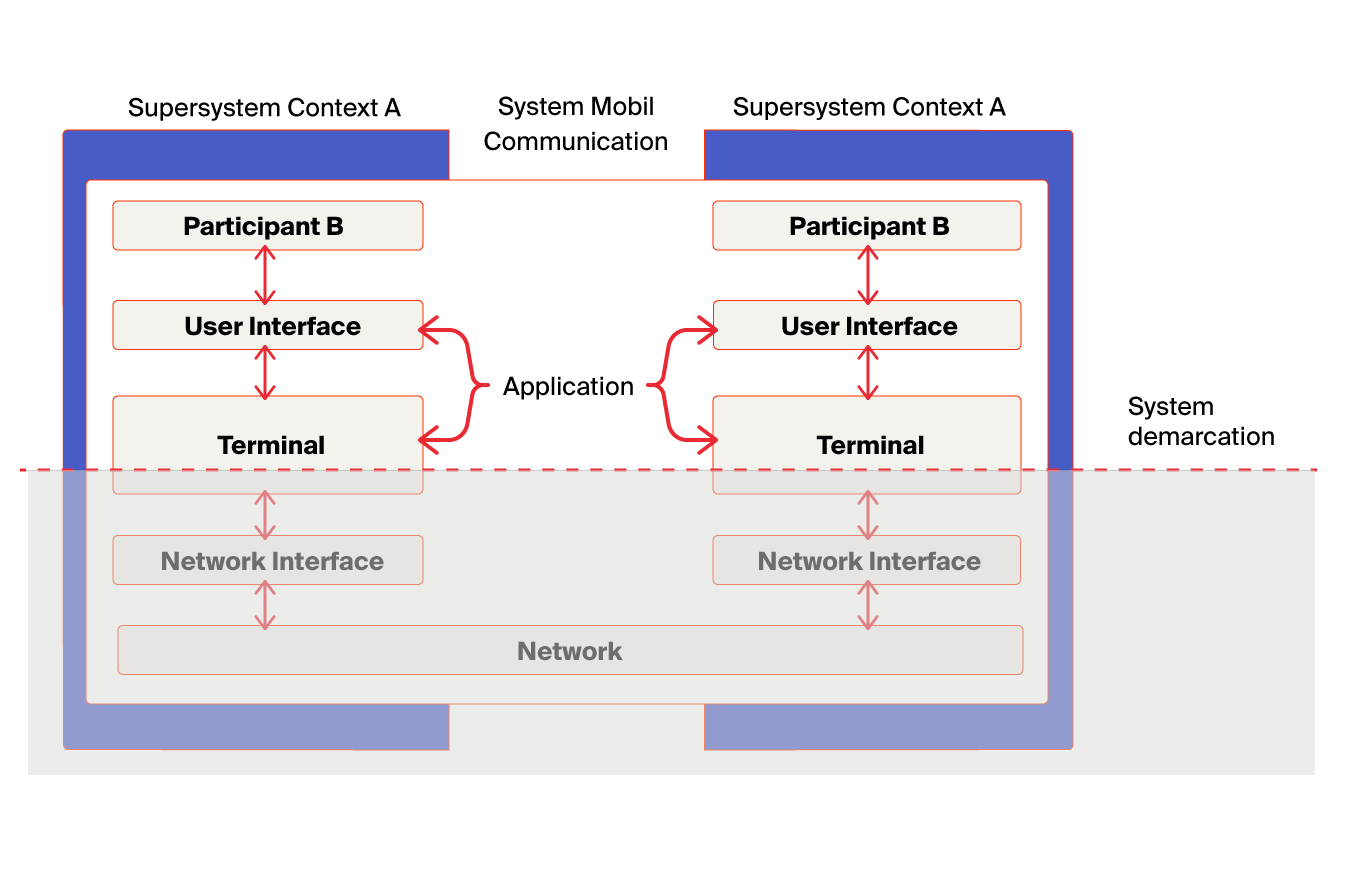
Communication is a central component of daily life, with various definitions and models developed over decades. Early models emphasized the transmission of knowledge and cognition, supplemented by a common code understood by both sender and receiver. Shannon and Weaver’s linear communication model, developed in 1948, laid the foundation for modern information and communication systems. This model, focusing on message transmission, is particularly suitable for designing practical system models for mobile communication. An understanding of these models informs the formulation of user demands and requirements in mobile communication, enabling system designers to develop need-oriented applications.

Structuring the Technological Potential and User Needs

Understanding the System of Mobile Communication

Current 3G application development often prioritizes technical feasibility, resulting in applications emerging from coincidence or the simple adaptation of Internet and GSM services. This approach can lead to fragmented, individual ideas rather than integrated system concepts, making users feel like “guinea pigs” for untested technology. While the theoretical potential of 3G is vast, the challenge lies in reducing this variety to an intuitive level for users. Providers must offer flexible, integrated modular systems that enhance users’ quality of life and work, as this is what clients ultimately value and will pay for.

Possibility-System of Mobile Communication

Within the Possibility-System, technological potentials of mobile telecommunication technologies are analyzed from the user's perspective, divided into three subsystems: Mobility, Data, and Communication. Each subsystem examines specific factors:

  • Mobility involves potentials resulting from the flexibility and movement of system elements.

  • Data focuses on various data types that can be transmitted over multiple channels.

  • Communication details different constellations of participants and processes, such as point-to-point, multi-point, and any-point communications. Communication relations can be asynchronous (e.g., email, voicemail) or synchronous (e.g., phone call, chat), and processes are either content-oriented or transmission-oriented.

This system approach logically and reasonably reduces the variety of technological possibilities, providing a structured framework for qualifying and positioning application fields.

Requirement-System of Mobile Communication

The Requirement-System centers on the user and aims to establish widely accepted parameters for developing need-oriented applications in mobile communication. This system considers user types, communication processes, and the respective place and time aspects of usage. The parameters—User, Place, Process, and Time—are further subdivided into detailed elements that include individual user types, specific communication contexts, environmental influences, life and business processes, and temporal elements. These parameters support a structured evaluation and positioning of new services and applications based on user needs.
Identifying and Assessing Application Fields through
Systemic Design

Systemic Application Identification

The Systemic Application Identification method translates 3G technology potentials into profitable, need-oriented applications and services by selecting criteria like user type, process, place, and time. Application scenarios are then designed and visualized, considering user integration to identify needs and evaluate potential solutions. This process combines the Possibility-System and the Requirement-System to create a complete framework for identifying relevant application fields.

Inclusion of Potential Users—Didactive User Interaction

User acceptance is essential for the success of new applications, and this is examined through didactive interaction, a method rooted in Socratic questioning. This approach uses skillful questioning to uncover hidden knowledge about the relationships between needs and products, leading to new realizations by the interviewees themselves. This discursive method is more effective than standardized interviews or classical market studies for identifying user needs and preferences. Maieutic interviews involve decision questions and wh-questions, providing deeper insights into user needs and transferring these insights into functional application systems.

Assessing the System-Design Approach for 3G

The maieutic system analysis method anticipates and assesses user needs, supporting the identification of suitable application fields for new technologies. The developed generic system model of mobile communication, constructed from a user perspective, serves as a knowledge base that integrates social and technical insights, guiding the creation of market- and customer-focused product and service concepts. The system-design approach has been validated through the assessment of four 3G service concepts by mobile business experts, who focused on market potential and need-orientation.
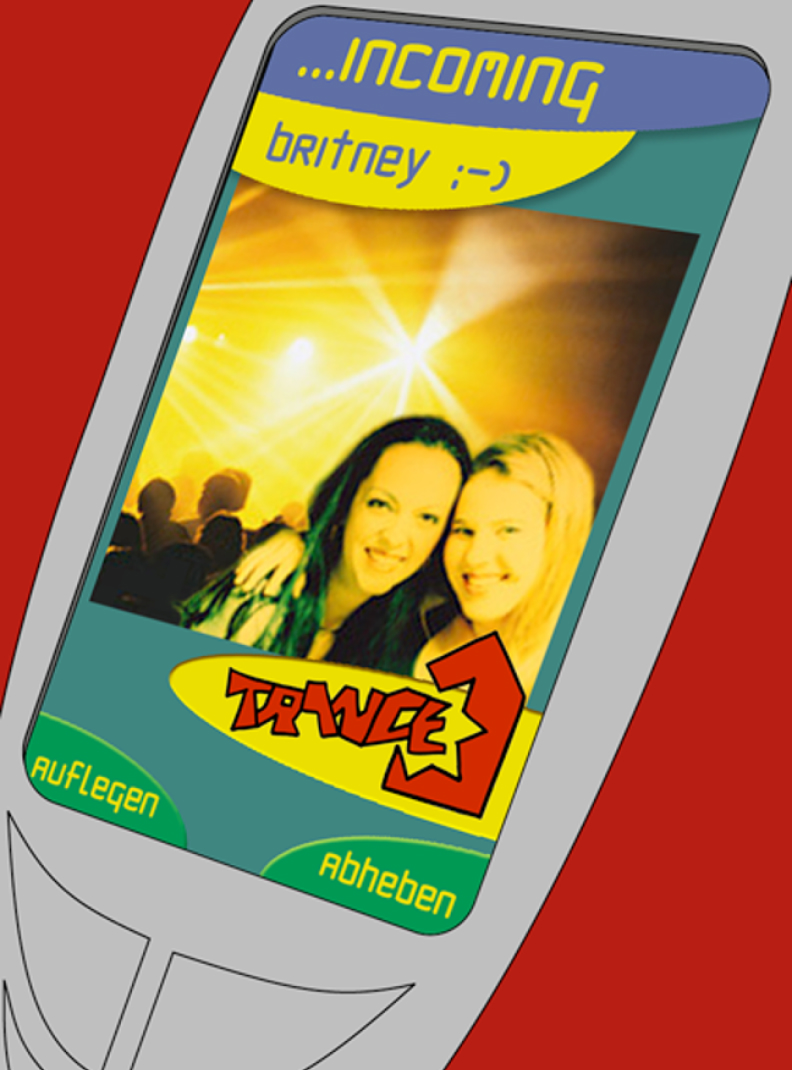
An example of a practical application is the BusinessCall scenario. Traditional call establishment processes often disrupt the recipient’s routine, with limited information provided through caller line identification. Using 3G technology, individual information can be transmitted during call establishment, allowing the recipient to prepare before accepting, rejecting, or redirecting the call. For instance, a business partner can inform a colleague about a delayed arrival while en route, enhancing communication efficiency and user control.

Conclusion

Integrating User-Centered Design for Market Success

Detailed knowledge of human behavior and the contexts of daily life and work is essential for understanding future market potentials. The system-design approach incorporates user needs early in the research and development process, fostering human-centered, innovative product development while minimizing R&D risks. By emphasizing a balance between technological potential and user orientation, the system-design method lays a foundation for creating meaningful and profitable 3G applications that resonate with users and support the transition to a wireless information society.

Published in

COTIM-2001 Proceedings From E-Commerce to M-Commerce

Year

2001

Authors

Oliver Gerstheimer, Christian Lupp

Next publications

Continue reading

Searching for the design roots of the future

Paper

Searching for the design roots of the future

Future-oriented design: sustainability and systems thinking as the key to success

Reading time: approx. 37 seconds

Where is design changing, or rather: where must design change?

The technical innovations of the information age, such as the computer, the internet and mobile communications, are not only changing business processes, value chains and professional fields. They are causing profound changes in our communication behavior, the way we live, learn and work.

The industrial society is evolving into an information society. Access to global information, constant availability and accelerated communication processes have brought us many advantages and conveniences, but also one problem: complexity. Recognizing and dealing with this complexity are the great challenges of our time.

This also creates new requirements for the areas of planning, development and design. Where is design changing, or rather: where must design change?

Published in

Maschinen und Geschichte – Machines and History. Beiträge des 9. Internationalen Kongresses der Deutschen Gesellschaft für Semiotik

Year

1999

Authors

Oliver Gerstheimer, Christian Lupp

Next publications

Continue reading

Nexxus – New Ways Of Working

Paper

Nexxus – New ways of working

What kind of world do (and did) we want to work in?

Reading time: approx. 1' 11"

Information technology and globalization are the decisive factors that will fundamentally change the structures of the working world. Flexibility, creativity and competence will take on a new significance. People are also placing new demands on the work of the future. An individually-minded generation is looking for a combination of different lifestyles, which should be reflected in their work.

Concept

The concept of the Nexxus start-up and service center addresses these processes and creates synergies between changing social and societal concepts of life and the restructuring of economic processes.

Nexxus is the concept of a start-up and service center for the areas of planning, design, development and consulting.

In the Nexxus center, a conglomerate of 'one-man entrepreneurs' with different service competencies work side by side and with each other. Everyone is their own boss and responsible for their own business. These young entrepreneurs can realize their needs for independent work and cooperation with similarly minded individual entrepreneurs, including project-related teamwork (group membership).

Planning

As part of the overall planning process, a forward-looking spatial concept supports communication with one another and creates networks. The physical proximity of the entrepreneurs dynamizes interdisciplinary working relationships, increases social competence and generates a higher potential for creativity, especially through informal communication and further training. In the Nexxus concept, the individual entrepreneur becomes part of the knowledge management and can fall back on corresponding structures, which usually take years to build up in conventional companies.

Goal

The aim of the concept is to design a modern form of workplace for the interface between training and professional reality, which is intended to help founders overcome the barriers of a lack of experience and excessive structural and financial demands.

Published in

Design ist okay. Innovationstransfer

Year

1998

Authors

Oliver Gerstheimer, G. Krey, Christian Lupp

Next publications

Continue reading

Get in touch
You can reach us by phone at +49 561 310 595 10 or
by email at hello@chilli-mind.com.
Get in touch
You can reach us by phone at +41 41 711 98 40 or
by email at gruezi@chilli-mind.ch.